Construction is one of the most hazardous industries in Canada. Every year, thousands of Canadian construction workers are injured on the job — and tragically, the construction sector consistently accounts for one of the highest rates of workplace fatalities in the country. At the Canadian Compliance Institute, our online Construction Safety training courses are built specifically around Canadian occupational health and safety (OHS) legislation — including the Canada Labour Code Part II, provincial OHS Acts, and sector-specific construction safety regulations — so your workers, supervisors, and site managers have the knowledge they need to go home safe every day.
Why Construction Safety Training Is Critical for Canadian Employers
Under Canadian law, employers in the construction industry have a legal duty of care to protect every worker on their site — including employees, subcontractors, and visitors. Failing to meet OHS obligations can result in stop-work orders, significant fines, project delays, and in the most serious cases, criminal charges under the Westray Amendment (Bill C-45) to the Criminal Code of Canada, which holds organizations and senior officers criminally liable for workplace safety failures.
Beyond legal compliance, investing in Construction Safety training delivers real operational benefits:
- Reduce workplace injuries and fatalities by equipping workers with the skills to identify and control hazards before incidents occur.
- Meet federal and provincial OHS obligations under legislation including the Occupational Health and Safety Act (Ontario), WorkSafeBC OHS Regulation, Alberta OHS Act, CNESST regulations (Quebec), and equivalent legislation across all provinces and territories.
- Avoid costly project shutdowns — a single serious incident can halt an entire project, resulting in significant financial and reputational losses.
- Lower Workers' Compensation Board (WCB) premiums through a documented record of proactive safety training and hazard management.
- Win more contracts — many project owners, general contractors, and public procurement processes require proof of valid safety certification for all workers and subcontractors.
- Demonstrate due diligence — documented safety training is your strongest defence in the event of a regulatory investigation or legal proceeding.
In Canada's construction industry, safety training is not just a legal requirement — it is a competitive advantage.
What Our Canadian Construction Safety Courses Cover
Our Construction Safety training library covers the full range of hazards and compliance requirements specific to Canadian construction environments — from residential and commercial building projects to infrastructure, civil engineering, and industrial construction. Key topics include:
- Construction Site Orientation & Induction — Introducing new workers to site-specific hazards, emergency procedures, and their rights and responsibilities under Canadian OHS law.
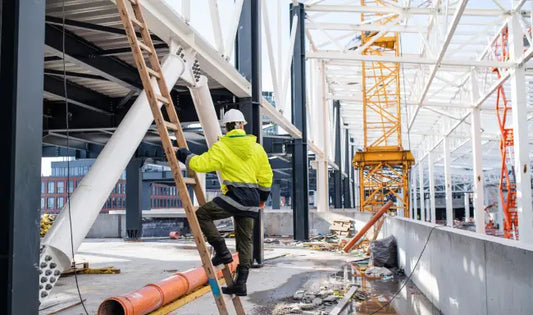
- Working at Heights — Fall protection planning, guardrail systems, personal fall arrest systems (PFAS), and ladder and scaffold safety, aligned with provincial working at heights regulations including Ontario's mandatory Working at Heights training standard.
- Hazard Identification & Risk Assessment — Conducting Job Hazard Analyses (JHAs), completing hazard assessments, and applying the hierarchy of controls on Canadian construction sites.
- Excavation & Trenching Safety — Soil classification, shoring and sloping requirements, atmospheric testing, and safe entry and exit procedures for excavations.
- Scaffold Safety — Erection, inspection, use, and dismantling of scaffolding systems in compliance with provincial OHS scaffold regulations.
- Electrical Safety & Lockout/Tagout (LOTO) — Recognizing electrical hazards on construction sites, safe work around energized equipment, and implementing lockout/tagout procedures.
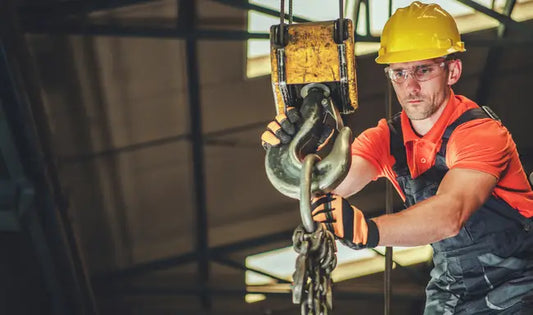
- Crane & Lifting Equipment Safety — Pre-use inspections, load capacity awareness, rigging fundamentals, and signaller and operator responsibilities.
- Personal Protective Equipment (PPE) — Correct selection, fitting, use, and maintenance of hard hats, high-visibility vests, safety footwear, hearing protection, eye protection, and respirators on Canadian construction sites.
- Confined Space Entry — Permit-to-work systems, atmospheric monitoring, rescue planning, and safe entry procedures for confined spaces on construction sites.
- WHMIS 2015 for Construction — Understanding Safety Data Sheets (SDS), workplace labels, and the safe handling of hazardous products commonly used in construction, aligned with Canada's Workplace Hazardous Materials Information System (WHMIS 2015).
- Musculoskeletal Injury Prevention — Safe manual handling techniques, ergonomics on construction sites, and strategies to prevent strain injuries among construction workers.
- Supervisor Health & Safety Responsibilities — Understanding the legal duties of construction supervisors under Canadian OHS legislation, conducting toolbox talks, and managing safety documentation.
All courses are fully online, mobile-optimized, and include assessments and downloadable certificates suitable for presenting to OHS inspectors, Workers' Compensation Boards, and general contractors across Canada.
Who Needs Construction Safety Training in Canada?
Construction Safety training is a legal requirement for workers at virtually every level of the construction industry in Canada. Provincial OHS legislation places specific obligations on employers, supervisors, and workers alike — and many certifications must be renewed regularly. Key groups who need training include:
- New construction workers who require site induction training and foundational OHS awareness before beginning work on any Canadian construction site.
- Experienced tradespeople — including carpenters, electricians, plumbers, ironworkers, and heavy equipment operators — who need role-specific safety training and periodic refreshers.
- Construction supervisors and forepersons who carry direct legal responsibility for the health and safety of workers under their supervision under provincial OHS Acts.
- Site safety officers and OHS coordinators responsible for developing and enforcing site safety plans, conducting inspections, and liaising with regulatory authorities.
- General contractors and project managers who must ensure all workers and subcontractors on their sites meet applicable safety training requirements.
- Subcontractors and independent tradespeople who must demonstrate valid safety certifications to access worksites and fulfil contractual obligations.
- Construction company owners and senior management who bear ultimate legal responsibility for OHS compliance under the Canada Labour Code and provincial legislation, and who may be held personally liable under the Westray Amendment.
- Apprentices and trades students entering the construction workforce for the first time and needing foundational safety knowledge aligned with Canadian standards.
Whether your projects are in Ontario, Alberta, British Columbia, Quebec, or any other province or territory, our courses reflect both federal requirements and the specific OHS regulations that apply in your jurisdiction.